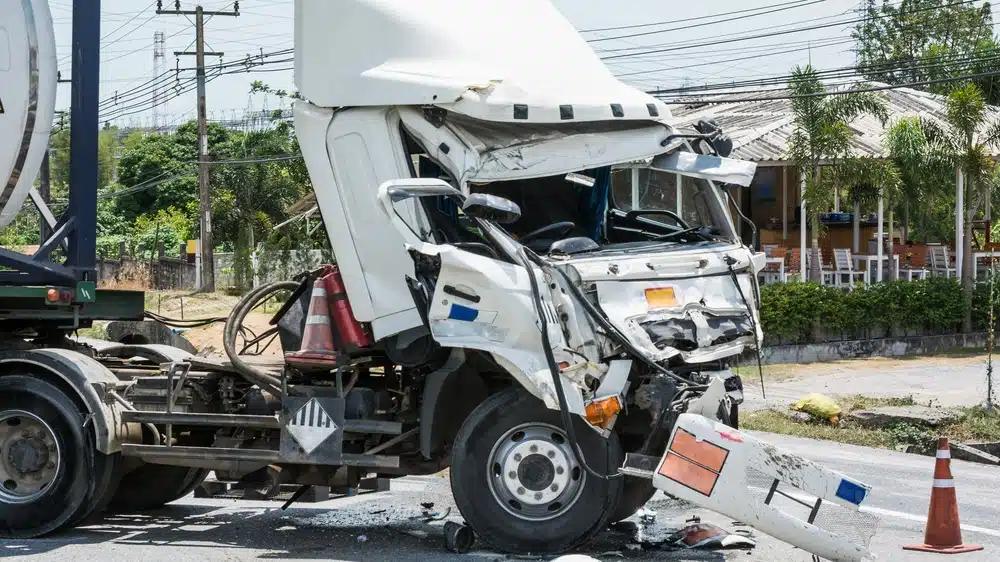
A catastrophic collision with an 18-wheeler on a Texas highway, like I-35 or I-20, leaves devastation in its wake. Metal twists, glass shatters, and lives change instantly.
While the police report might blame the person behind the wheel, serious crashes frequently reveal responsibility spread across several parties. A Dallas truck accident lawyer investigates beyond the driver to identify every liable party. Limiting your claim to just the truck driver often means leaving millions of dollars on the table—money your family needs for medical bills and lost income.
Finding hidden liability beyond the truck driver allows us to access the resources necessary to rebuild your life.
Exposing these additional sources of fault makes a major difference in pursuing fair compensation. Commercial trucking operations include layers of oversight, from companies managing fleets to entities handling maintenance or cargo.
Negligence often occurs at the executive level long before the truck hits the road. Large truck crashes remain a persistent issue. Tens of thousands of people suffer injuries annually because profit-focused corporations cut corners on safety.
Exploring negligence beyond the driver opens pathways to stronger claims and greater accountability, forcing all negligent actors to pay for the damage they caused.
Unseen Facts
- Texas truck accident cases frequently involve multiple liable parties due to the complex business structure of commercial trucking.
- The "Deep Pocket" Strategy involves identifying solvent defendants like logistics brokers and warehouses to ensure full compensation for catastrophic losses.
- Vicarious liability, or respondeat superior, holds trucking companies responsible for the negligent actions drivers perform while working.
- Federal Motor Carrier Safety Administration (FMCSA) regulations set strict standards, and violations often provide automatic evidence of negligence.
- Third-party liability can extend to maintenance providers for faulty repairs, cargo loaders for improper securing, and manufacturers for defective parts.
- Preserving evidence requires immediate action to secure driver logs, black box data, and maintenance histories before companies destroy them.
The Deep Pocket Strategy: Securing What You’re Owed
Most individual truck drivers do not have the personal assets to pay for a traumatic brain injury or a spinal fusion. Even their insurance policy might have a limit that fails to cover a lifetime of care. Truck accident lawyers often look beyond the driver to identify other responsible parties and additional insurance coverage.
We use the deep pocket strategy to solve this problem. This legal approach involves looking up the chain of command to find the corporations that hold the real power and the real insurance policies.
We investigate these corporate entities to access higher commercial policy limits:
- Logistics Brokers: These companies act as middlemen, connecting shippers with trucking companies. They have a duty to hire safe carriers. We sue them for negligent hiring if they choose a trucking company with a known history of safety violations just to save a few dollars.
- Warehouses and Shippers: Facilities that load the trailers must follow strict rules. We target them if they pressured the driver to speed or if they loaded the cargo in a way that made the truck unstable.
- The Motor Carrier: The company name on the door of the truck often holds the largest insurance policy. We look for systemic failures in their training, supervision, and maintenance programs.
Accessing these "deep pockets" is not about greed; it is about survival. Catastrophic injuries cost millions over a lifetime. You need a target capable of paying a seven-figure judgment.
Why Liability Often Extends Beyond the Driver
Commercial trucks operate under strict federal and state rules designed to promote safety. Accidents happen when corporations ignore these rules to boost profits. Fault rarely stops with the individual driver because drivers usually follow orders from above. A truck accident lawyer in Dallas can help you investigate these violations and hold the responsible parties accountable.
Trucking companies have direct duties to hire qualified personnel, enforce rest requirements, and keep vehicles in safe condition. Systemic issues often force drivers into dangerous situations:
- Unrealistic Deadlines: Companies may pressure drivers to meet impossible delivery windows, leading to deliberate violations of rest periods and increased fatigue-related errors.
- Negligent Hiring: Inadequate screening during hiring allows drivers with poor records or insufficient training to operate heavy vehicles, directly contributing to preventable crashes.
- Lack of Oversight: Ongoing failure to monitor compliance with federal hours-of-service limits creates systemic risks for everyone on the road.
Texas consistently ranks high in commercial vehicle incidents. Data from the Texas Department of Transportation indicates thousands of commercial motor vehicle crashes annually. Employer-level oversights amplify dangers on busy corridors like those near Dallas logistics hubs.
Vicarious liability applies when drivers act within their job duties, shifting responsibility to the company and accessing higher insurance limits that better address severe injuries.
Vicarious Liability: Holding Employers Accountable
Texas law uses a principle called respondeat superior, which translates to let the master answer. Employers must answer for employee negligence during work activities. The company holds liability for crashes caused by speeding, distraction, or fatigue if the driver was on the clock.
This principle proves especially powerful in commercial trucking. Courts examine whether the driver acted in the scope of employment, such as hauling assigned freight or driving to a pickup location.
Texas courts apply this doctrine in many truck cases, allowing victims to pursue the company directly rather than limiting recovery to the individual driver.
Applying this doctrine changes the case dynamic:
- Automatic Liability: Companies face liability even without direct involvement in the crash, as long as the driver's actions occurred during job performance.
- Insurance Access: This doctrine opens access to substantial corporate insurance policies, often in the millions, to cover extensive damages.
- Corporate Accountability: It encourages better industry-wide oversight, as companies realize they will pay for their drivers' mistakes.
Pursuing the employer becomes necessary when a driver falls asleep after exceeding allowed hours under company pressure. This strengthens cases by targeting deeper resources, helping cover extensive medical needs.
FMCSA Violations as Evidence of Negligence
The Federal Motor Carrier Safety Administration (FMCSA) enforces nationwide standards for commercial vehicles. Breaches of these rules often establish negligence automatically, known as negligence per se. Proving the company broke a federal law makes proving fault much easier in a truck accident claim.
Common violations that build our case include:
- Hours of Service (HOS): Limits prevent fatigue by capping daily driving at 11 hours after 10 consecutive off-duty hours. Violating this suggests the company values speed over safety.
- Maintenance Neglect: Rules mandate regular checks on critical systems like brakes, tires, lights, and steering. Skipping these checks to keep the truck moving constitutes negligence.
- Unqualified Drivers: Standards require thorough background checks and medical certification. Putting a driver with a history of seizures or drug use on the road puts everyone at risk.
Evidence from electronic logging devices (ELDs), inspection reports, or logs directly links company oversight failures to the accident. FMCSA data consistently shows that fatigue and vehicle defects rank among top contributing factors in large truck crashes.
Other Parties Who May Share Responsibility
Third parties contribute to many truck wrecks, yet they often escape scrutiny in standard police reports. We look outside the cab of the truck to find other negligent actors.
Cargo loaders, maintenance contractors, and manufacturers all play a role in the safety of a commercial vehicle. Consider these potential defendants:
- Cargo Loaders: Shippers who improperly secure loads can cause shifts leading to rollovers. A truck is only as stable as its load. If a third-party warehouse stacked pallets unevenly, they share the blame for a jackknife accident.
- Maintenance Contractors: Outsourced mechanics often rush repairs. A brake failure is rarely an "accident"—it is usually the result of a mechanic missing a warning sign or a company refusing to pay for new parts.
- Parts Manufacturers: Product liability claims target manufacturers for design flaws. A tire blowout caused by a manufacturing defect shifts partial fault to the tire supplier.
Investigating these angles requires reviewing contracts, loading manifests, and bills of lading. A comprehensive approach maximizes potential compensation sources by distributing responsibility across the supply chain.
The Importance of Immediate Investigation
Uncovering hidden liability demands swift, detailed evidence gathering in common truck accident cases. Trucking companies often destroy evidence if you do not stop them. We send preservation letters immediately to freeze their records.
We focus on securing specific data points:
- Black Box Data: The truck's Electronic Control Module (ECM) captures speeds, braking patterns, and engine performance in the moments before impact.
- Driver Logs: Electronic logs reveal if the driver violated federal rest rules or falsified their driving time.
- Hiring Files: Personnel records show if the company ignored red flags during the background check process.
- Maintenance History: Service logs prove if the truck had recurring mechanical issues that the company ignored.
Acting quickly protects this time-sensitive information. Professional guidance guarantees no potential responsible party gets overlooked, from the trucking company to upstream suppliers.
How Compensation Works with Multiple Liable Parties
Texas uses a modified comparative negligence system. You can recover damages as long as you are 50% or less at fault. Identifying multiple liable parties helps ensure that even if one defendant cannot pay, others can fill the gap.
Allocating fault among multiple parties increases total available funds:
- Economic Damages: This covers quantifiable losses like medical bills, lost wages, future care costs, and property damage.
- Non-Economic Damages: This addresses intangible harms like physical pain, emotional distress, and physical impairment.
- Punitive Damages: Juries may award these to punish companies for gross negligence, such as knowingly letting an unlicensed driver operate a rig.
This structure supports thorough recovery plans tailored to life-altering injuries, such as spinal cord damage requiring ongoing therapy.
FAQs: Finding Hidden Liability Beyond the Truck Driver
What evidence proves a trucking company pressured drivers to violate safety rules?
Internal communications often reveal the truth. We look for text messages, emails, or Qualcomm messages from dispatchers urging drivers to get it there by any means necessary. Pay structures that reward drivers for speeding or penalize them for taking legal rest breaks also constitute strong evidence of systemic pressure.
How do independent contractors affect liability in Texas truck cases?
Trucking companies often label drivers as independent contractors to avoid vicarious liability. Courts look past the label to the reality of the relationship. If the company controls the driver's route, schedule, and equipment, Texas law typically treats them as employees, making the company liable regardless of the contract language.
Can cargo shippers be held responsible for accidents caused by shifting loads?
Yes. Shippers and third-party logistics companies have a duty to load trailers according to industry standards. If they leave large voids in the trailer or fail to use load locks, the cargo can shift during a turn, causing the truck to overturn. We can sue the loading facility for this negligence.
What role do black box records play in identifying hidden liability?
These devices capture objective data that witnesses cannot see. The black box might show the truck was traveling 15 mph over the speed limit or that the driver never touched the brakes before impact. This data can prove the truck had a mechanical governor that was tampered with or that the driver was too fatigued to react.
Are there time limits for requesting records from trucking companies?
Federal law only requires trucking companies to keep certain records, like logbooks, for six months. Once that time passes, they can legally delete them. Sending a spoliation letter immediately is the only way to legally force them to preserve this evidence for your case.
How does federal preemption affect state claims involving FMCSA violations?
Federal regulations usually set the minimum safety standard. Breaking a federal rule serves as evidence of negligence in a state court case. Texas law works alongside federal regulations to hold bad actors accountable.
Ready to Uncover the Full Truth?
Serious truck accidents demand relentless pursuit of every avenue for accountability. The Law Firm of Aaron A. Herbert, P.C. aggressively investigates hidden liability to fight for maximum compensation on behalf of catastrophically injured victims across Dallas-Fort Worth. We know where the evidence hides, and we know how to get it.
Our team stands ready to fight the massive insurance carriers on your behalf. We answer our phones 24/7, and our staff speaks Spanish (Se habla español). You pay nothing unless we recover money for you.
Contact us today for a free consultation. Let us take the weight of this legal battle off your shoulders.

ABOUT THE ATTORNEY
Aaron A. Herbert
Founding Attorney
Board Certified in Personal Injury Trial Law
Aaron founded The Law Firm of Aaron A. Herbert in 2010 to focus on developing each client's case and seeking its maximum value. For over a decade, he has represented people seriously injured in major accidents and industrial catastrophes, pursuing trial verdicts and settlements while working to reduce the stress of litigation.
Education
- Texas A&M University · B.S., Criminal Justice, 1999
- University of Oklahoma College of Law · J.D., 2002; graduated in the top of his class
Trial experience & approach
Aaron earned numerous jury verdicts at boutique personal injury litigation firms. According to his biography, he spent a year as the top-earning litigation attorney at a firm that frequently appeared in verdict searches as having one of the highest numbers of trial wins in Texas. At another Dallas personal injury firm, he moved from managing pre-litigation attorney to managing litigation attorney over seven years as the firm grew into one of Dallas's largest personal injury firms.
His biography describes a reputation as one of America's most aggressive trial lawyers, with noteworthy recoveries from judges and juries and substantial pretrial settlements. Most of those settlements included confidentiality agreements requested by the defense. Aaron has said the recoveries were justified by the injuries and losses involved, which no amount of money could make someone choose to experience.
His approach combines passion, preparation, persistence and courtroom imagination. He believes a well-supported, engaged and motivated team working cooperatively helps deliver strong representation, with the goal of achieving the best possible result for every client.
Dallas roots, military service & publication
Born and raised in Dallas, Aaron enlisted in the United States Marine Corps after high school and later received an Honorable Discharge. He completed his university and law degrees after his military service and became a lifelong Sooners football fan in law school.
Publication: “Litigating Dog Bite Cases,” Texas Dog Law Seminar, Dallas, 2009.
Professional affiliations & recognition
Professional affiliations and recognition listed in Aaron’s biography:
- State Bar of Texas
- American Bar Association
- Association of Trial Lawyers of America (now American Association for Justice)
- Texas Trial Lawyers Association
- Dallas Trial Lawyers Association
- Dallas Bar Association
- Tarrant County Bar Association
- Million Dollar Advocates Forum
- The National Trial Lawyers – Top 100 Trial Lawyers
Trial experience & approach
Aaron earned numerous jury verdicts at boutique personal injury litigation firms. According to his biography, he spent a year as the top-earning litigation attorney at a firm that frequently appeared in verdict searches as having one of the highest numbers of trial wins in Texas. At another Dallas personal injury firm, he moved from managing pre-litigation attorney to managing litigation attorney over seven years as the firm grew into one of Dallas's largest personal injury firms.
His biography describes a reputation as one of America's most aggressive trial lawyers, with noteworthy recoveries from judges and juries and substantial pretrial settlements. Most of those settlements included confidentiality agreements requested by the defense. Aaron has said the recoveries were justified by the injuries and losses involved, which no amount of money could make someone choose to experience.
His approach combines passion, preparation, persistence and courtroom imagination. He believes a well-supported, engaged and motivated team working cooperatively helps deliver strong representation, with the goal of achieving the best possible result for every client.
Dallas roots, military service & publication
Born and raised in Dallas, Aaron enlisted in the United States Marine Corps after high school and later received an Honorable Discharge. He completed his university and law degrees after his military service and became a lifelong Sooners football fan in law school.
Publication: “Litigating Dog Bite Cases,” Texas Dog Law Seminar, Dallas, 2009.
Professional affiliations & recognition
Professional affiliations and recognition listed in Aaron’s biography:
- State Bar of Texas
- American Bar Association
- Association of Trial Lawyers of America (now American Association for Justice)
- Texas Trial Lawyers Association
- Dallas Trial Lawyers Association
- Dallas Bar Association
- Tarrant County Bar Association
- Million Dollar Advocates Forum
- The National Trial Lawyers – Top 100 Trial Lawyers